Under Vienna's Streets - The History of the Vienna Sewer System
The history of the Vienna sewer system
A labyrinth among the streets of Vienna
Beneath Vienna’s streets lies an approximately 2,500-kilometer labyrinth. This is about as long as the distance from Vienna to Paris and back again. Every day, around half a billion liters of wastewater flows through these channels to the main sewage treatment plant in Simmering.
But the Vienna sewer system is more than infrastructure. It tells nearly 2,000 years of city history, from Roman soldiers to epidemics and empresses to one of the most famous films of all time. Anyone who is interested in underground Vienna will not get past it.
From the Romans to Maria Theresa
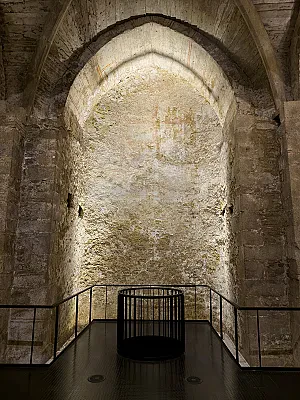
The story begins around the year 100 AD. Roman soldiers laid out an astonishingly modern canal system in the Vindobona Legion Camp. An exposed collecting channel under the fire station Am Hof was about 1.80 meters high, brick brick, with a sole of roof tiles. Rainwater flowed through stone grids with rosette-shaped openings, and before the sewage entered the Danube, it even passed through three sewage tanks.
With the destruction of the camp around 400 to 405 this knowledge fell into oblivion for centuries. Only in the Middle Ages do underground discharges reappear, the so-called “murders”. Between 1435 and 1479, the municipal chamber accounts record expenditure for their maintenance almost every year. However, the wastewater ended up mostly untreated in open streams such as the Ottakringer Bach or the Vienna River.
The real turning point was the reconstruction after the Second Siege of the Turks in 1683. The new houses were mostly connected to street canals. In 1706, homeowners were ordered to abandon their cesspools, and in 1753 Maria Theresia ordered the construction of main canals. middle of the 18th In the 19th century, the city was almost completely channeled within the bastions. Vienna is often referred to as the first fully channeled city in Europe.
How Cholera Underground Vienna
In the 19th century Vienna grew rapidly, the canals did not keep up. By 1830 there were only about 20 kilometers of road canals in the city, in the suburbs about 90. The sewage flowed directly into the Vienna River and at the same time contaminated the wells from which people fed their drinking water.
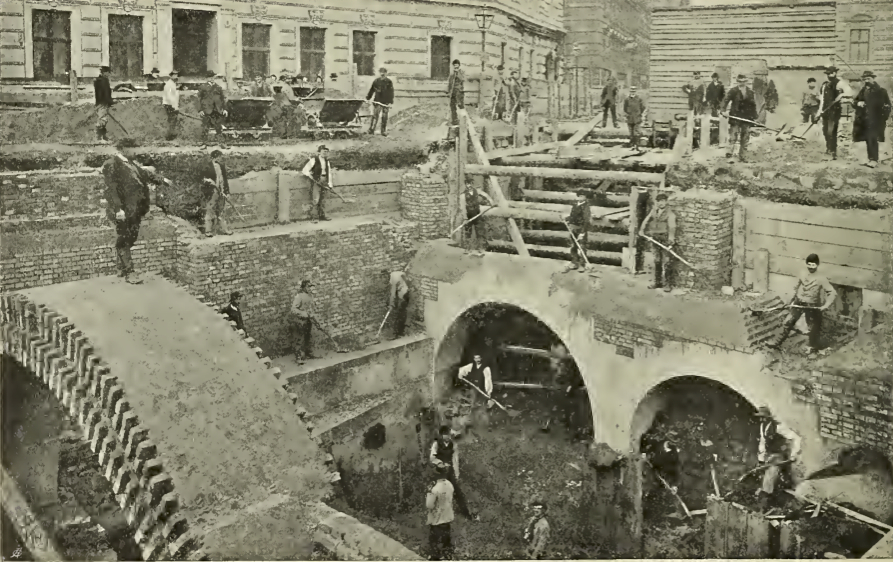
The cholera epidemic of 1831/32 became a wake-up call. Just before their eruption, the construction of two large “main waste canals” along the Vienna River began. The canal on the right bank was built from 1831 to 1834 on about 4.9 kilometers, the one on the left bank from 1836 to 1839. The Viennese called them soon only theCholera canal. They caught the sewage from the suburbs and collected it into the Danube Canal.
They weren't perfect. In the summer was often lacking flush water, the canals stank, and in heavy rain everything continued to run into the Vienna River. Even in the 1860s, living on the Vienna River was considered hazardous to health. The epidemic was finally defeated only by the First High Spring Water Line and the regulation of the Vienna River.
In the decades afterwards, the city was “cellarized” bit by bit. Streams such as the Ottakringer Bach, the Als or the Währinger Bach disappeared into brick vaults. From 1892 onwards, the large main collection channels were built along the Danube Canal, which were completed until 1904. By 1914, the network had grown to more than 900 kilometers of road canals.
How a movie made the channels world famous
In the fall of 1948, Carol Reed began shooting The Third Man in the bombed-out city occupied by four allies, based on a script by Graham Greene. Joseph Cotten, Orson Welles, Alida Valli and Trevor Howard played the leading roles. The secret star of the film is the Viennese underground.
The famous chase, in which Orson Welles flees through the canals as a black market trader Harry Lime, was filmed at original locations around Karlsplatz. The canal police in the film played real members of the Vienna Canal Brigade, in their spare time. The action was not entirely out of thin air, because in the post-war period smugglers and black market traders actually used the canal network.
All the channel scenes were created in one place. Only the skilful camera work makes them look like a whole labyrinth. The famous fingers squeezed through a canal grid, on the other hand, were turned in a London studio because the real Viennese grids were too thick and too narrow.
The music is also unforgettable. The Harry Lime theme was played by the Viennese Heurigen musician Anton Karas on the Zither, and it stood for eleven weeks at number one in the American hit parade. The film premiered in London on 2 September 1949 and ran from 10. March 1950 also in Austria.

The Channel Network Today
From about 110 kilometers around 1830, a network of about 2,500 kilometers has become. It is operated by Wien Kanal, Austria’s largest channel operator, with around 450 employees. 99.8 percent of all Viennese households are connected, and yet the network grows every year by about ten kilometers.
The network is divided into five large catchment areas, whose collection channels direct the wastewater to the main sewage treatment plant in Simmering, the lowest point in Vienna. The longest of these, the right main collection channel along the Danube Canal, measures 16.6 kilometers. Every day about half a billion liters of wastewater arrives there, according to the Vienna Canal about as much as five million bathtubs.
The most recent chapter writes theWiental Kanal, a sewage tunnel deep under the Vienna River. It prevents waste water from spilling into the river during heavy rainfall. The first 3.5 kilometers were built between 1997 and 2006, since 2024 it is extended by another nine kilometers to Auhof. It is the largest canal construction project in the history of Wien Kanal and should be completed in 2028.
Discover the city under the city
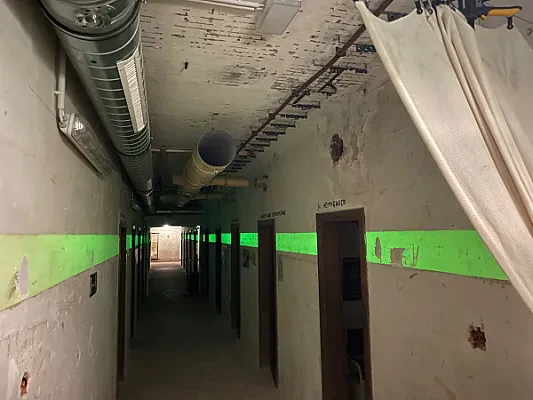
The Vienna sewer system shows how much history lies under the asphalt. Roman engineering, the fear of cholera, a film classic and one of the most modern sewage systems in Europe are hidden right under our feet. The canals are only part of underground Vienna.
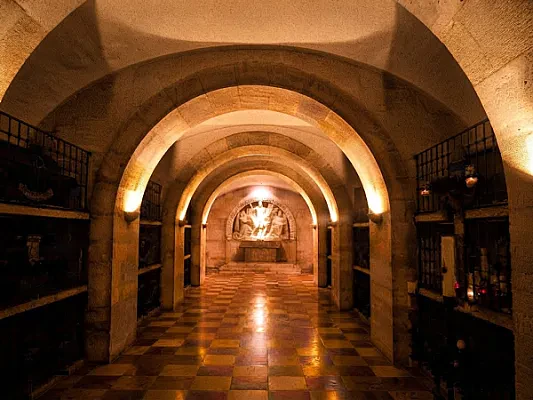
Under the city center are also centuries-old cellars, wine cellars and forgotten rooms that tell at least as many stories. Lust together with us Vienna is different to discover? We look forward to welcoming you on the next tour!
SourcesCity of Vienna, Canal Network·City of Vienna, sewerage·City of Vienna, insight into the Vienna Canal System·City of Vienna, Vienna Canal and The Third Man·Vienna History Wiki, Sewerage·Vienna History Wiki, Sewerage in Vindobona·Vienna History Wiki, Cholera Canals·Vienna History Wiki, The Third Man·Vienna History Wiki, Vienna Channel·OTS, construction start Wiental Kanal 2024·New time, Vienna sewerage